
COAL MINING
Surface coal workings
There is much evidence of surface coal mining in the Nettlebridge
valley where the Carboniferous Coal Measures comes to the surface.
Some of the best preserved medieval coal mining remains occur around
Benter, Stratton Common and Harridge Wood. Here, the coal seams
outcrop in the valley floor and could be worked in a series of
trenches and bell pits. There is documentary evidence of coal mining
on Stratton Common from 1300 through to 1700.
Numerous mining remains occur in Harridge Wood, now a nature reserve
run by the Somerset Wildlife Trust. Several shafts and bell pits
occur here [654 482], and further remains occur in the separate
eastern part of Harridge Wood here [658 483]. At least 52 bell
pits (small shafts sunk along the surface outcrop of a coal seam)
probably dating from medieval times lie scattered through the wood,
together with a number of deeper shafts and 16 adits (horizontal
mines for access and drainage). The remains of a number of water
leats probably constructed to power water pumps for the coal mines
can also be seen.
However, most coal was extracted from a large number of generally
small mines between Chilcompton and Mells, which worked the thin
coal seams in the Lower and Middle Coal Measures. Up to nine named
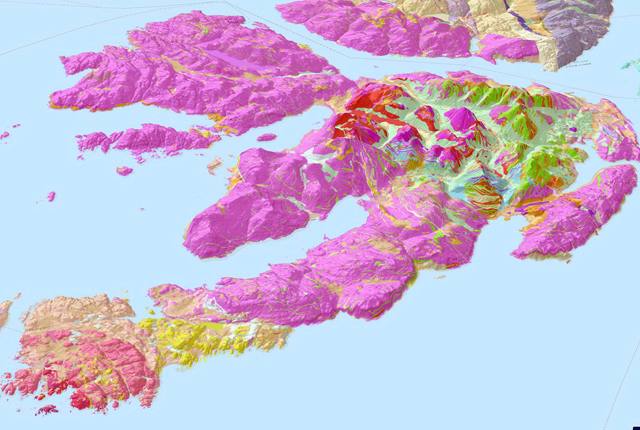
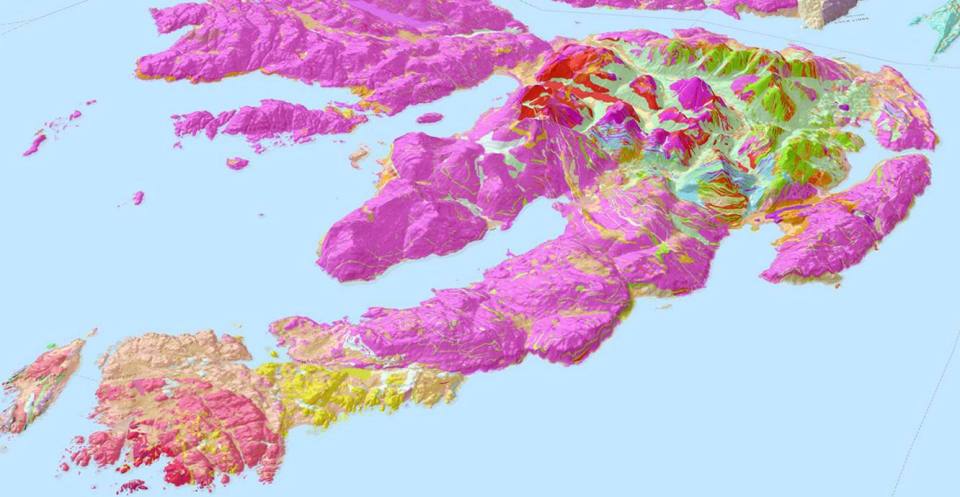
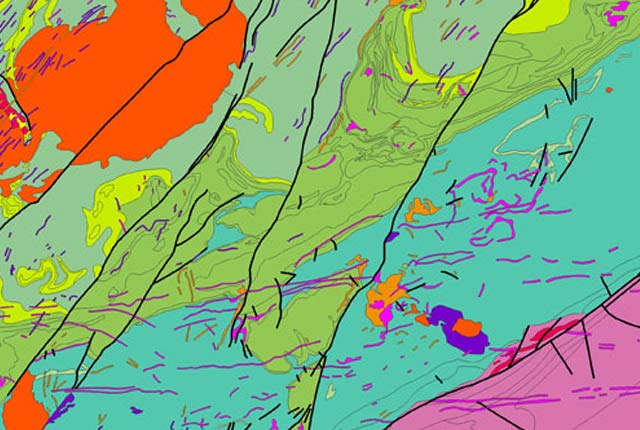
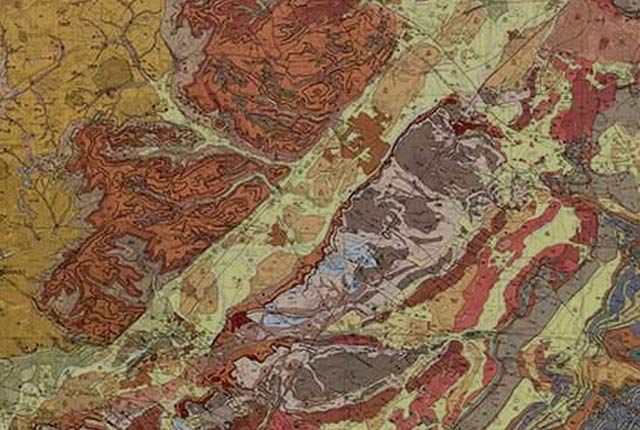
coal seams were exploited in the Lower Coal Measures (shown on the geological map sheet 281).
Moorewood Colliery [ST 642 495]
The most westerly of the mines is Moorewood Colliery near Gurney
Slade. Little is known about the old Moorewood colliery except that
the shaft, 111 m deep, was sunk in 1824. The colliery worked six
major coal seams, but closed in the 1860s. The new Moorewood shaft
was sunk between 1860–70 by the Westbury Iron Co. to augment
coal supplies from its other mine at Newbury Colliery near Vobster,
superseding the old pit. However, the colliery experienced difficulties
and flooded, and was finally closed by 1873.
In 1909 the mine was reopened by the Moorewood Colliery Co. Ltd.
with a tramway connecting it to the Somerset and Dorset Joint Railway
near Chilcompton. It achieved full production within four years,
and by 1924 was averaging 750 tons per week. However, it was never
really profitable and by 1930, production had fallen back and in
1932 the pit was closed for good. The remains of the old spoil
heaps and the old tramway incline can still be seen in the field
north of the river.
Strap Pit [ST 648 495], Nettlebridge [ST 654 494] and Sweetleaze
Collieries [ST 647 494]
These three pits formed a closely linked group of mines a couple
of kilometres south-west of Stratton-on-the-Fosse. The Nettlebridge
pit was being worked in 1831 when water from the Benter Level found
its way into the workings and stopped working for a while. The
mine suffered from poor ventilation and bad underground roads and
the mine was closed in about 1870. Little is known about the early
history of Sweetleaze colliery except that it closed by 1858. It
was reopened in 1861, and work carried out to improve the drainage
situation by driving a new level to connect with the Benter drainage
adit and clearing out the old Edford adit.
This was superseded by the sinking of Strap or Downside Colliery.
The shaft was begun in 1862 and finally, after a new owner stepped
in, completed in 1874. The shaft reached a depth of 560 m, the
deepest in Somerset and proved six major coal seams. However, the
lack of any rail link made the mine unprofitable and it was closed,
along with Sweetleaze in 1870. However it was given a new lease
of life over 80 years later.
New Rock Colliery [ST 649 506]
A short distance to the north was the New Rock Colliery. This
pit was sunk in 1819 and consisted of a winding shaft and a pumping\upcast
shaft. The shaft was initially dug to the Globe seam at 166 m depth,
but this was extended to the Garden Course seam at a depth of 360
m. The mine was taken over by Frederick Spencer in 1886 who developed
the mine. Rather than deepen the shafts further, he drove an incline
from the bottom of the winding shaft into the Great Course seam
with a compressed air haulage system. He also made other improvements
including building an electric power house in 1904 to assist ventilation.
By 1935, output ranged from 3500–5000 tons a month and
the mine employed about 700 men.
Under the National Coal Board in 1947 further improvements were
made, notably the installation of an electric winding engine on
the pumping shaft. The NCB attempted to improve output from New
Rock which had considerable reserves, but was restricted by the
small diameter shaft. Rather than develop New Rock, it was decided
to reopen the neighbouring Strap Pit and link it to New Rock and
Sweetleaze collieries, thus creating a more efficient mine, which
began a new lease of life as the ‘Mendip Colliery'.
Mendip Colliery [ST 648 495]
Strap Pit was reopened in 1953 by the National Coal Board in an
attempt to make the New Rock Colliery more efficient and utilize
the large available reserves. The capping of the Strap Pit shaft
was removed and the shaft cleared at a cost of £47 000. The
shaft bottom was reached in 1956 and the workings connected to
the neighbouring New Rock Colliery in 1957 when it became known
as Mendip Colliery. Construction on winding gear was done and it
was envisaged that coal from the New Rock Colliery would be taken
out through the Mendip shaft. Other investment in winding machinery
and mining equipment took place and the mine became fully operational
in 1964. However, there were severe labour shortages in the area.
This coupled with transport difficulties and the lack of a rail
link caused the pit to make bad losses in 1968. The decision was
taken to close the mine and by 1969 any available material was
sold as scrap and the shafts infilled with material from the spoil
heaps.
Old Rock Colliery [ST 649 497]
This shaft, just north of Strap Pit was sunk in about 1786 by
Jacob Mogg and leased by him and several others. The mine was drained
by an adit (the Benter Level) which enabled the mine to be worked.
The adit was probably started in 1789 and was certainly in use
by 1809. Several shafts were sunk, one of which was 219 m deep
in 1860. The pit closed down in 1863, but it may have been reopened
under a new name after this date when Strap Pit was developed.
No trace remains today except a few spoil tips.
Barlake Colliery [ST 661 493]
This mine, near Barlake Farm a couple of kilometres south of Stratton-on-the-Fosse
was sunk by Sir John Hippisley and others sometime before 1819,
and a stream engine installed by 1825. The pit closed down, probably
around 1840, and certainly by 1870 and little remains except for
a small spoil heap and the tumbled stonework of the colliery buildings.
Pitcot Colliery [ST 653 492]
A short distance from Barlake Colliery was Pitcot Colliery. This
mine was sunk sometime before 1750, but little is known until the
1780s. The mine was owned by the Knatchbull family, and was probably
still working in 1824, but had closed by 1863. Little remains today
except the remains of spoil heaps in the surrounding fields and
the shaft stonework.
Holcombe Collieries
This comprised a small group of mines developed by the Gilson
family in and around the village of Holcombe in the early 20th
century. A drift mine was sunk at Knights Quarry [ST 668 501] to
the northwest of the village in about 1914, but only six men were
employed and the site closed down in May 1920. Another drift mine
was driven behind Holcombe Brewery [ST 6725 4991] in 1914, but
little coal was found and the site closed in 1918. The third mine
was in Blackpool Wood, south of the village [ST 668 492]. Here,
after £30 000 was spent on development, coal was eventually
found and about 100 tons of coal were being mined each week. In
February, 1823, the mine hit water and closed down the following
month. The sites are either heavily overgrown or most surface evidence
has been destroyed. Little can be seen today.
Coal Barton Pit, Ringing Bell Mines and Moon Pit
Several small pits occurred in and around the village of Coleford.
The Coal Barton pit [ST 680 491] worked the Main and Perrink
coal seams and was sunk in a field south of Coleford. Over 100
people were working at the pit in 1842, but the mine closed in
the 1850s. Little survives of this early 19th century colliery
and much of the site has been disturbed by later quarrying. An
isolated stone-lined ventilation shaft [at ST 683 492] has been
infilled and only a shallow depression remains. The Ringing Bell
group [ST 690 494] comprised several shafts about 100 m deep working
the nearly vertical Perrink and Main coal seams. The workings were
abandoned about 1830 and in 1831 were said to be in a 'ruinous
state'. Moon's Pit [ST 689 493] lay to the south of the Ringing
Bell mines but little is known about the site.
Edford Colliery [ST 672 489]
Edford Colliery, situated on the Dorset and Somerset Canal near
Edford, was sunk before 1863. In 1887, the pit employed 22 miners,
and was owned by Howard James Ridler, who set up the Edford Colliery
Co. Ltd. in 1914. The mine operated with two shafts with an engine
house and boiler in between, and worked the Perrink, Standing Coal
and Main Coal seams, but the ground conditions were very poor.
In February 1886 two men were killed in an explosion which set
fire to part of the workings, causing the lower part of the shaft
to be sealed off. The mine also supplied foundry coke from coke
ovens at the pit head, but although the company was quite innovative,
installing coal washing plant and making fuel briquettes, the pit
closed in July 1915. The site today is a concrete factory and none
of the original buildings remain.
Newbury Colliery [ST 696 498]
The Newbury Colliery, between Highbury and Upper Vobster, was
producing coal in 1799, superseding the nearby Old Newbury Colliery
which had been working the Dungy Drift seam since about 1710. The
mine supplied good quality coking coal to the Westbury Iron Works.
By 1867 the mine was owned by the Westbury Iron Works Company,
managed by J Batey and employing 53 miners. By the 1920s, the
mine was producing 40 000–50 000 tons a year but was in serious
financial difficulties. In September 1921 155 men were sacked to
try and cut costs and the remaining 270 offered to take a cut in
pay to keep the pit open. Between December 1922 and March 1923
the pit was closed through the breakdown of the pumps. By June
1927 the pit was in the hands of an official receiver and the men
were on day to day contracts. A report stated that there were 15
million tons of reserves but the shaft needed deepening to 586
m. However, there was not the financial backing and the pit closed in
August 1927. The site is now largely levelled, but some remains
can still be seen including the tramway.
MacKintosh Colliery [ST 691 497]
The MacKintosh pit was sunk in 1867 as an extension to the neighbouring
Newbury Colliery, and the shaft here and connected with Newbury
by a small airway; air being pumped down the Newbury shaft and
out of the MacKintosh shaft. Another shaft was sunk at Luckington
in 1835 as an escape route, the miners having to climb the 41 m
shaft on ladders. The mine worked the Garden Course seam and the
coal was sent via a narrow gauge tramway to Newbury for screening
and loading on to the standard gauge trucks.
The mine changed ownership several times between 1895 and 1917,
and even shut down for a while. An accident occurred 1919 when
the winding rope broke, and because the pumps were linked to water
tanks on the lift cage, the mine began to flood and was permanently
closed. Alas, the pit ponies could not be brought out and had to
be destroyed.
Mells Colliery [ST 712 500]
Sunk in 1863, this pit was still operation in 1874, but had been
closed down by 1881. In 1909, a new lease was taken out on the
mine and a group of entrepreneurs set up the Mells Collieries Ltd.
However, both the financial and working conditions of the pit were
very poor. In 1930, mounting debts caused the pit to go into receivership
and it was taken over. This new company also made losses and the
mine was taken over again. This company again made a loss went
into receivership in 1939. Despite new investment and an attempt
to modernise the workings, the mine finally closed on the 30th
October 1943.
In 1994, the engine house and fan house dating from 1909, together
with the spoil heap were still intact, providing an unusual example
of a small, structurally complete early 20th century mine.
Vobster Old Colliery, Vobster Breach Colliery and Vobster Colliery
The coal seams in the Nettlebridge valley around Vobster were
highly contorted and often vertical, so mining techniques more
akin to Cornish tin mines were often employed to extract the coal.
The mines here were also prone to firedamp with several explosions
being recorded; eleven men were killed in one such blast in 1800.
The area contains several small pits, but three main sites are
known; Vobster Colliery [ST 703 489], Vobster Breach [ST 697 488]
and Old Vobster [ST 7053 4893].
Vobster Colliery had three shafts and worked the Perrink, Stone
Rag, Main and Firestone seams. A branch of the mine led west and
connected to the later Vobster Beach pit. Little remains except
a spoil heap, the shaft head and a few building stones.
Vobster Breach pit was sunk in April 1860 to connect with Vobster
Old workings, finally connecting through in May 1861. Another shaft
was sunk later. The mine also hosted two ranks of coking ovens,
which can still be seen today, although now seriously overgrown
and in danger of collapse. The mine was linked by a tramway to
Vobster and the Newbury railway via an incline. Another old pit,
Vobster Old, occurs to the east, but little is known about the
site and all that remains is a spoil heap.
Ebbor Gorge [ST 523 484]
A thin belt of Coal Measures strata occurs in Primrose valley, at
the foot of Ebbor Gorge near Wells. Coal was mined here from a shaft
36 m deep in 1835, but the seams were very thin and only a small
amount of coal was mined. |